The recent discovery of Kicking the Germ Out of Germany is nothing short of miraculous. This is a film that has been, for as long as I have been researching Lloyd’s career, a lost film. It is one of many of his short subjects that I had never been able to see, and as his biographer and chronicler, that has been a source of tremendous disappointment for me. So you can imagine my glee when I learned that a complete print had been found.
To backtrack: In 1938, an explosion occurred at the Pathe film archive in Bound Brook, NJ. Five years later, in August 1943, fire swept through the film vault at Harold Lloyd’s Beverly Hills estate, Greenacres. The nitrate stock stored there fed the flames and an explosion ensued. Many of Lloyd’s early short films were believed destroyed in those fires — among them a one-reel World War I comedy from 1918, Kicking the Germ Out of Germany.
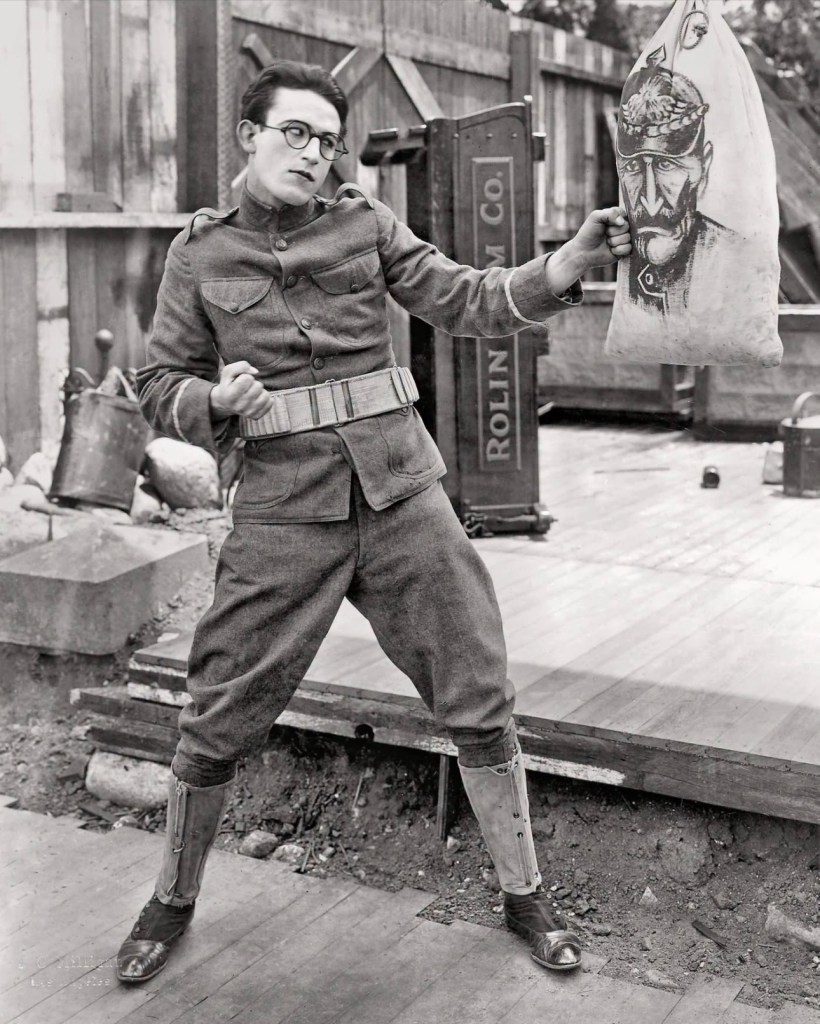
Harold Lloyd did not serve in the military during World War I. It had been determined, at that time, that he could more vitally contribute to the morale of the United States by continuing to make films. That he did, and Kicking the Germ Out of Germany was one of the films that, perhaps most incisively, fed the outlook of the population. This is a military-based film, with significant exposure of the Kaiser and Harold’s attempt to conquer him. So not only is this film historically significant because of its premise … but just the fact that another Lloyd film is now ready to be discovered by a new generation – that is to be celebrated.
Fast forward a few generations past the blasts: a black-and-white 35mm reel arrived at the Archivio Nazionale Cinema Impresa — the National Archive of Industrial Cinema — in Ivrea, Italy, part of the Centro Sperimentale di Cinematografia (CSC). The metal canister bore only a simple label: “Comedies.” The reel belonged to the collection of Milan’s Museo Nazionale Scienza e Tecnologia Leonardo da Vinci (National Museum of Science and Technology), deposited at Ivrea and sent for 5K digitization. When technicians unwound and screened it, they found a tinted 35mm projection print in remarkable shape — “almost perfect for a film more than a century old,” in the words of laboratory technician Ilaria Magni.
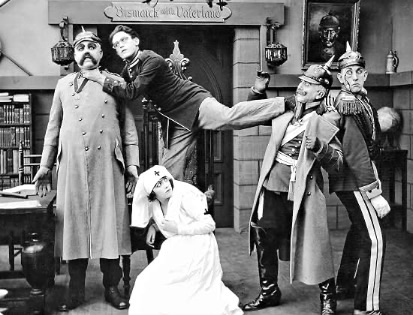
The print carried an Italian title, Come andò la faccenda (“How the Matter Turned Out”), which appeared in no archive’s records; the only documentation was a censorship certificate issued in 1924. But the star needed only a few frames to identify: Harold Lloyd. Research connected the Italian print to the lost 1918 original, Kicking the Germ out of Germany. Elena Testa, head of the Ivrea archive, reported the discovery to the worldwide network of film archives: “No one has ever confirmed that another copy survives.” That is true: this is yet another film preservation miracle.
In the film, HL plays a soldier who dreams he is on a dangerous mission behind enemy lines to rescue a Red Cross nurse (Bebe Daniels) from the clutches of the Kaiser — a piece of anti-German propaganda comedy made after the United States entered the First World War, its punning title lost entirely in the Italian release title.
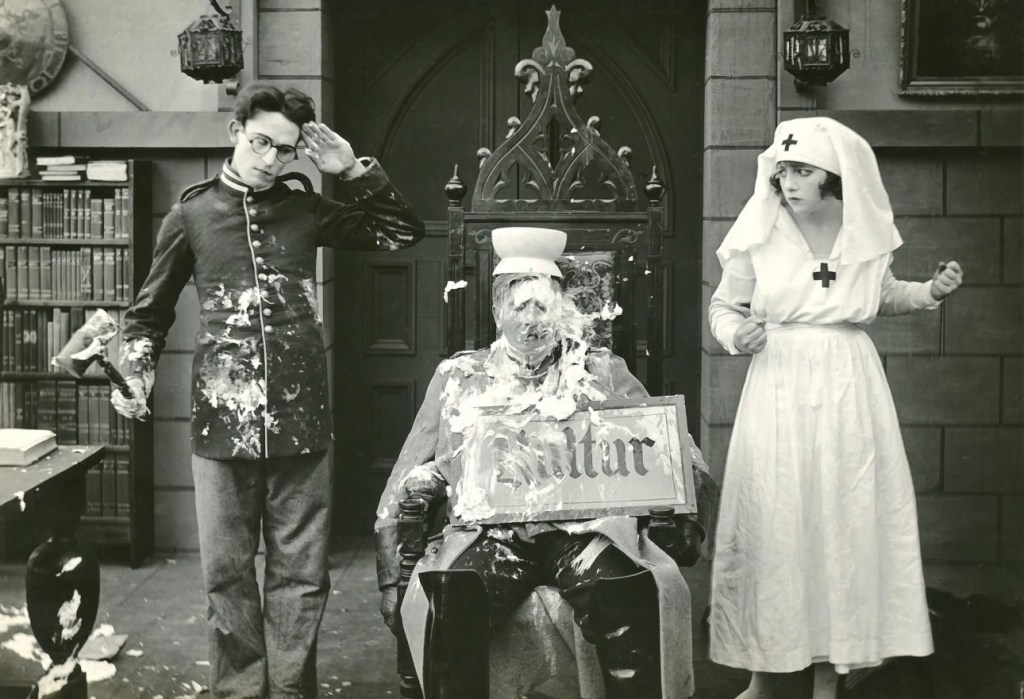
The restored film was screened on June 22, 2026 in the “Ritrovati e Restaurati” (Recovered & Restored) section of Il Cinema Ritrovato in Bologna, the Cineteca di Bologna’s festival of restored cinema.
Suzanne Lloyd, HL’s granddaughter and the holder of the rights to his films, welcomed the news. Contacted by email by La Stampa, she said, “Our archive contains only small fragments of that film, which was used to raise funds for the war effort. I am extremely grateful to the National Archive of Industrial Cinema for giving this lost film a new life. I can’t wait to see it.”
This film is significant for a number of reasons. First and foremost, in addition to what I noted above, the ability to see any lost Harold Lloyd film is noteworthy. Too many of his films, as well as scores of other films of the silent film era, have been lost to new generations. And so the discovery of this film allows us the opportunity to watch it, study it and make note of any uniqueness about the film.
And that I did, when blessed with the opportunity to see it (Kicking the Germ Out of Germany had long been on my bucket list of Lloyd films that wanted to see, but couldn’t. Now, thanks to this wonderful discovery, my eyes had a real treat).
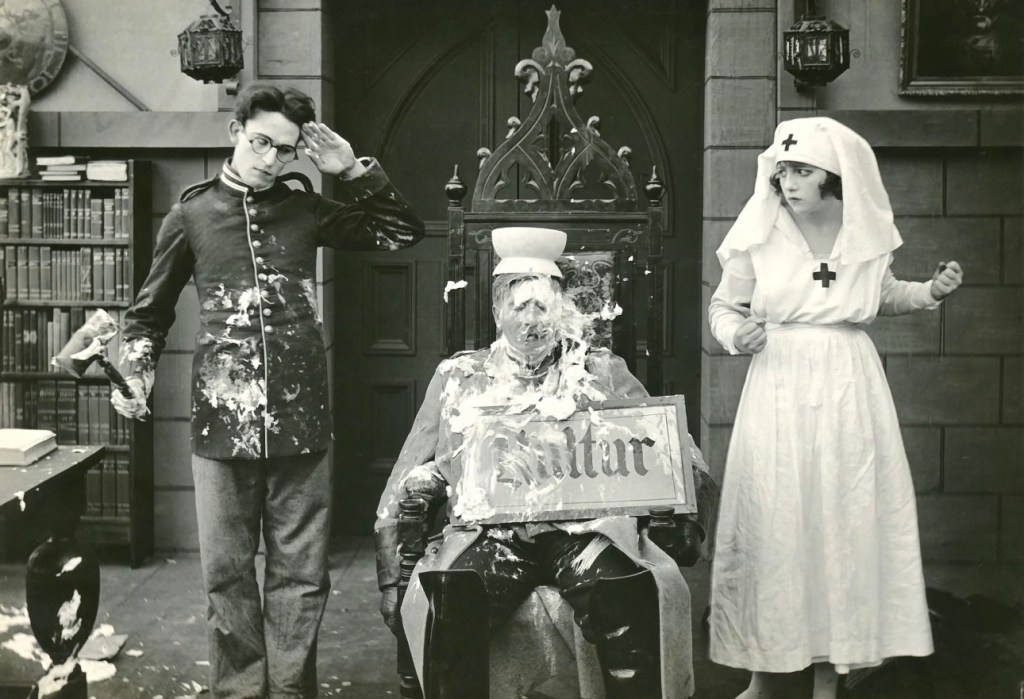
The print I saw had all the Italian inter-titles – as it has been decades since I have had to use my prior fluidity in the language, I was only able to catch a word here and there. Happily, however, the action transcended language barriers.
What especially struck me was how many important gags and plots in this film appeared in later HL comedies…let’s explore some key moments in Kicking the Germ Out of Germany through screen captures, which show how HL loved recycling good business — particularly his own.
You’ll recall, from the film’s synopsis above, that much of the action occurs in a dream. HL later used that “it was all a dream” tactic in I’m On My Way (1919).
Remember that, in Grandma’s Boy, HL (as his Granddaddy) infiltrated the opposition side, conquering all the military men (by plying them with liquor) one by one to meet his goal. This plot line first saw light of day in Kicking the Germ Out of Germany, as HL downs each of the Kaiser’s men, one at a time, by distracting them with a story and a hammer to the head.
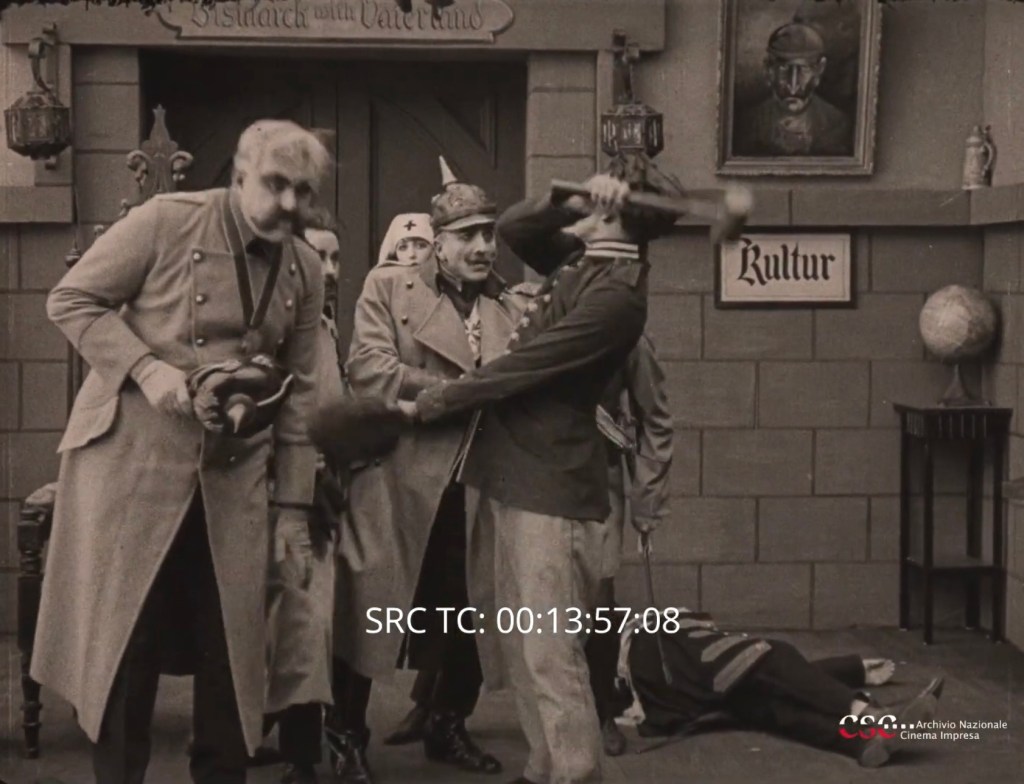
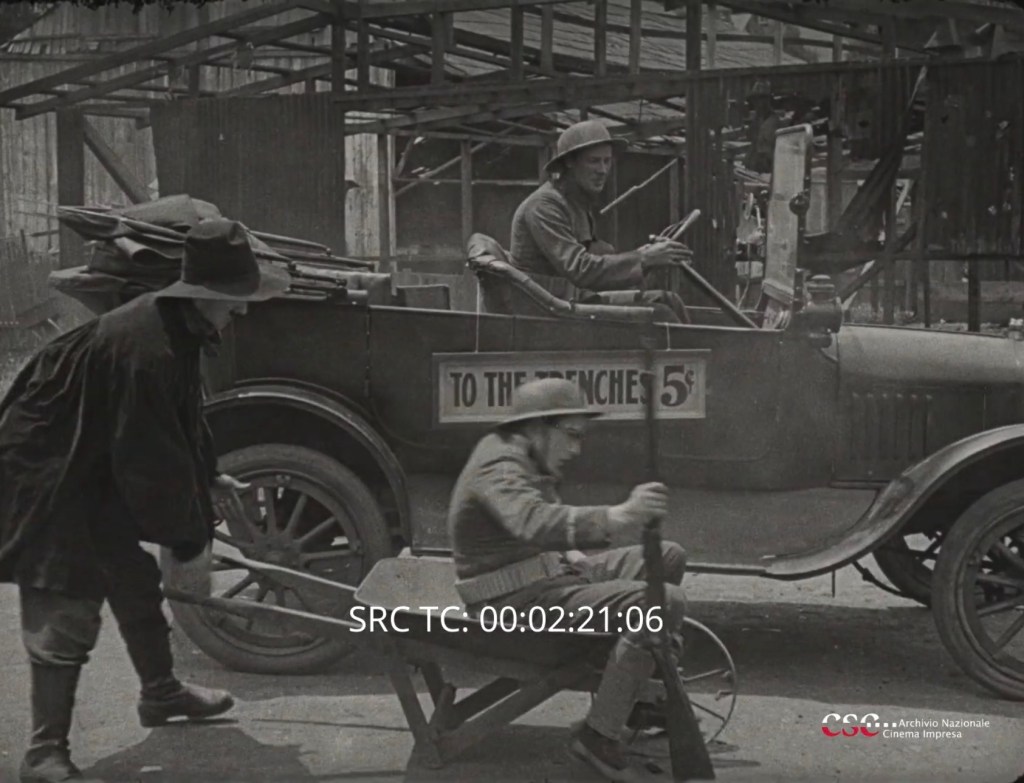
Also in Grandma’s Boy, HL (as Sonny) wants to join in the group of townsfolk looking to capture the tramp – they leave without him and he frantically runs after them. This happened first in 1918. Additionally, in Grandma’s Boy, a wheel barrow was used as a human transport (after Sonny captured the tramp). Well, in Kicking the Germ Out of Germany, this same gag was used so that HL could quickly catch up with his fellow soldiers.
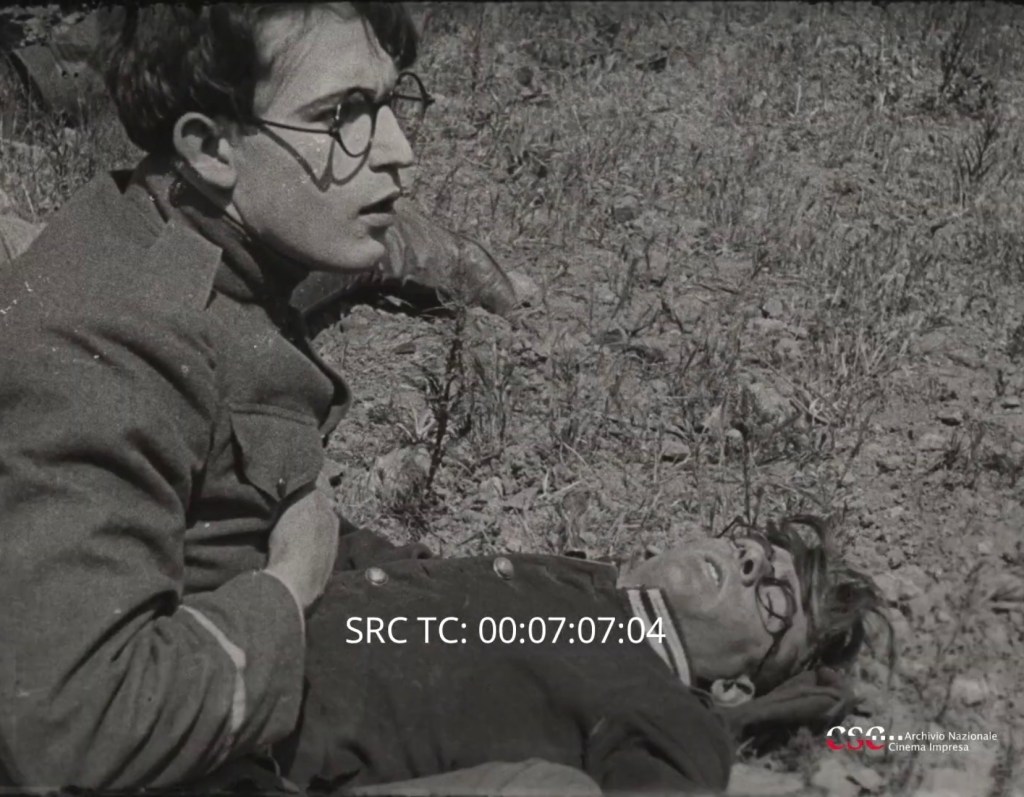
One gag in Kicking the Germ Out of Germany drew a plot point inspiration from both one of his past films, Pinched (1917), as well as a future film, His Royal Slyness (1920): that of taking on the wardrobe and identity of a lookalike. In our 1918 case, HL came upon a downed soldier from the other side who, like him, wore glasses. He stripped the body of its uniform (see below), put it on himself, and thus was able to enter the room (see two images above) where the Kaiser and his men were.
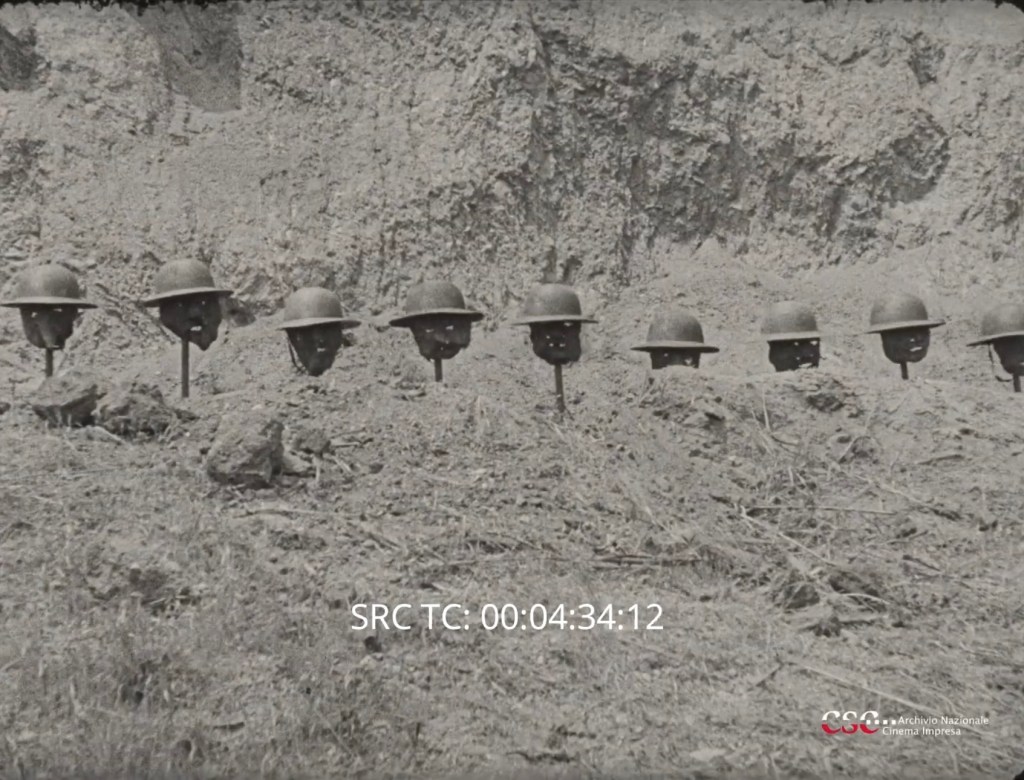
In Dr. Jack (1922), HL impersonates Lumpy Logan, resident lunatic, by donning paper teeth and a paper mask on a stick. Well, in Kicking the Germ Out of Germany, HL devises paper disguises to confuse the other side, as seen below.
These connections – HL inspiring himself – could only be known and identified by being able to see the film itself. And to be able to is a supreme joy for a film historian! Sharing all this with HL’s fans is an even greater joy for me.
As I have long said, film preservation continues to dazzle us; discoveries are still being made every day, and supporting film archives is a worthy use of spare dough. I am grateful for all efforts to preserve this historical artifact and give the world one more reason to love and admire Harold Lloyd. Here’s hoping that Kicking the Germ Out of Germany is swiftly incorporated into either a DVD set or a television screening.

